
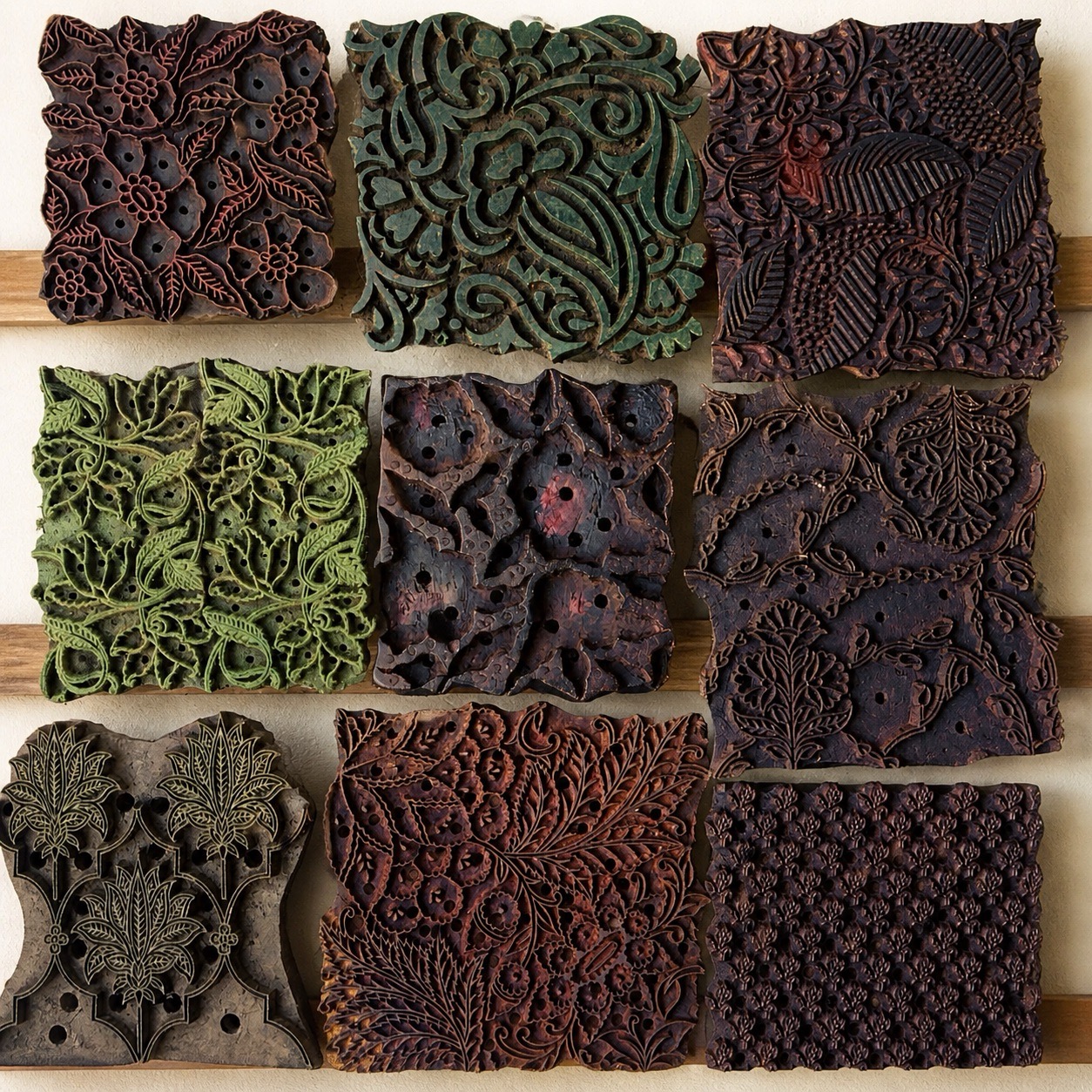
Consistency at volume comes from fixing the standard, not from removing the hand. We seal an approved sample, print against it one block and one colour at a time, and check registration, colour and handfeel at every stage inside our own workshop. Variation that stays within the sealed standard is the craft. Anything outside it does not ship.
The question usually arrives on a first call, phrased carefully so as not to give offence. It's beautiful — but can you hold it for four hundred pieces?
It is a fair question. Hand printing does not become consistent by accident — every impression is placed by eye, hundreds of them across a single length of cloth. What makes the four hundredth piece look like the first is a standard everyone can see, and a short chain of people who all answer to it.
What varies in a hand block print, and what does not
Most quality disputes in this trade come from a line nobody drew at the start. So we draw it early, in the sample. A motif that sits a hair off the line is the signature of a hand; a motif landing on its neighbour is a defect. Both are "variation" until someone says which is which.
| The hand, working properly | A defect we hold back |
|---|---|
| A motif fractionally off the line across a long run | A repeat that overlaps its neighbour or leaves an obvious gap |
| One length a shade deeper than the last | Colour drifting outside the range of the approved sample |
| A faint ghost at the edge where the block lifted | A smudge that blurs the motif itself |
| Gentle tonal movement within a colour field | Patchy areas where the dye has not taken |
| Dye showing through as a softer mirror on the reverse | Colour sitting on the surface with a pale, untouched back |
Once that table is agreed against a physical sample, an inspection stops being a matter of taste. Our finishing team is checking the cloth against something the buyer has already held.
Why everything happens under one roof
Most Jaipur supply chains are assembled from strangers: a printer here, a stitching unit there, a finishing house neither of them has met, an agent holding it together by phone. Every handover is a place where the standard slips and nobody is accountable.
We print, stitch, finish and pack in one workshop. Nothing goes to a middleman. That is the plain reason our prices sit below comparable hand block printed brands — there is no margin stacked at each handover — and it is also why a colour problem is caught on the table rather than discovered in a container.
- Sample and strike-off, printed on the cloth you have chosen.
- Colour approval against a sealed standard we both keep a copy of.
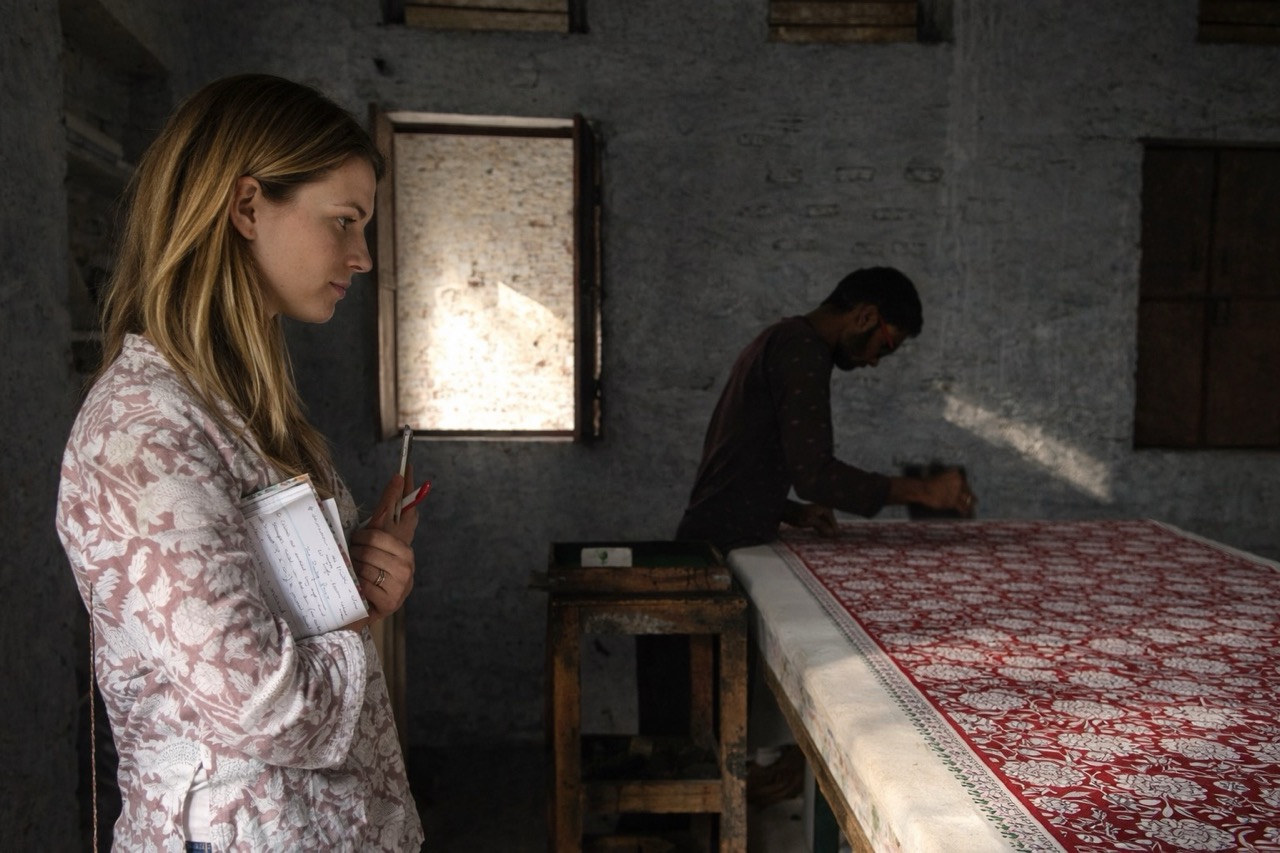
- Printing: one block, one colour, drying between each pass.
- Washing and open-air drying.
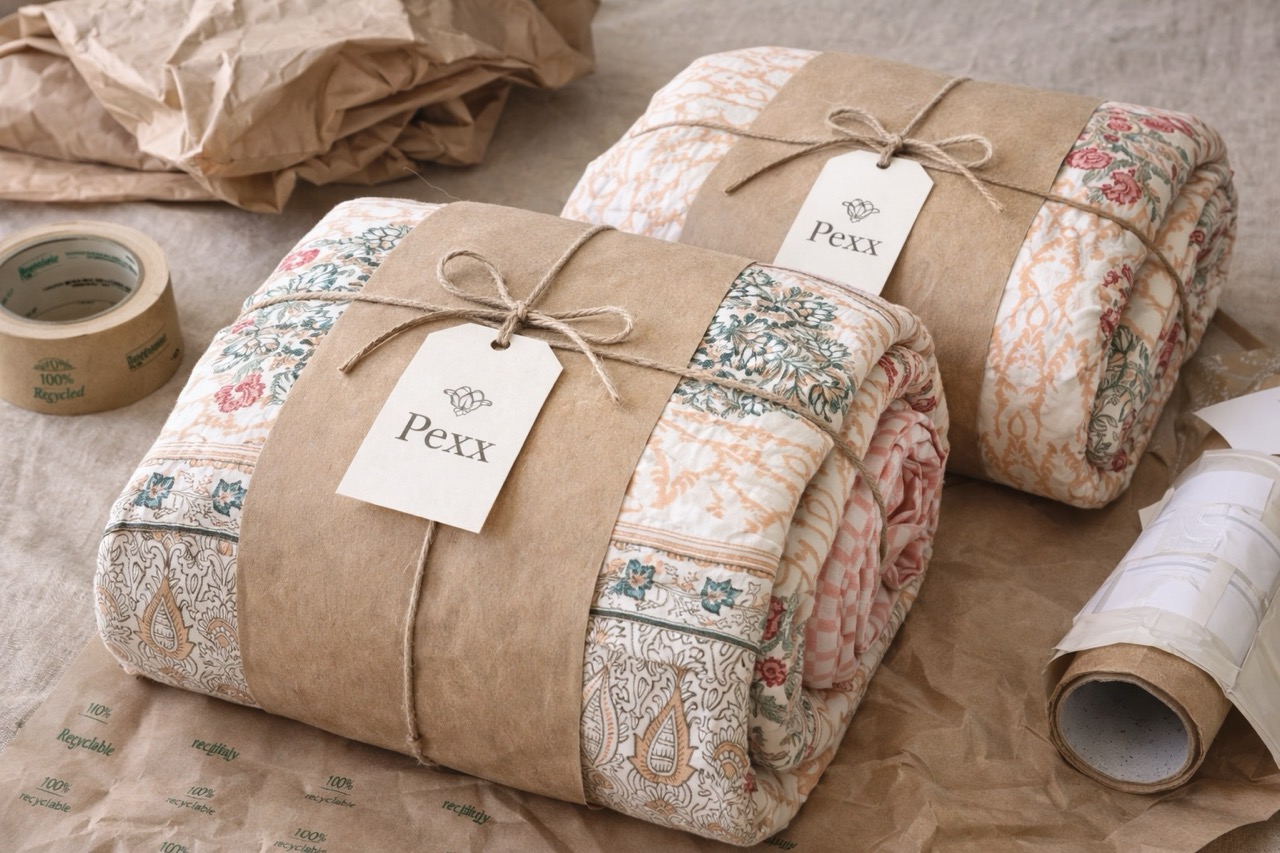
- Stitching and finishing, with labels and hangtags added here.
- Wash test, final review, packing.
Who is actually at the table
Our printers come from the Chhipa community, and most are second or third generation. They learned pressure from a parent, not from a manual. Women work across the whole workshop — printing and design as much as stitching and finishing — which is not the arrangement you will find everywhere in this cluster.
This matters commercially, not only ethically. Hand block printing is being displaced by faster industrial printing, and the skill only survives where there is steady work for it. An order placed with a hand printing workshop is what keeps a printer at the table next season. That is the whole mechanism. There is nothing more romantic about it than that.
What we check before anything is packed
Sampling and colour approval come first, because they are cheap to fix and expensive to skip. After printing we wash-test, then check registration and print clarity across the run rather than on one flattering length. Finishing review covers stitching, labels and handfeel — the last of which no instrument reads. Somebody runs a hand across the surface, and they know what it should feel like because they made the sample.
Dyes are azo-free and skin-safe on 100% cotton. The workshop runs zero-discharge and we keep water use down, which on a site that washes and sun-dries cloth every day is a working constraint rather than a slogan.
How long it takes
Forty-five days is our standard, and up to sixty when the quantity is large, the fabric is heavier, or the weather turns. Cutting new blocks for your own design sits inside that window, at the front — not added on top of it. Drying between colours is the part nobody can buy their way past. You cannot pay to make the sun work faster. We go into this properly in how long a block print order takes.
The one thing to do on your first order
Whoever you buy from, ask for a sealed sample and write your variation tolerance into the purchase order in plain words. "Motif shift acceptable, overlap not acceptable" is worth more than a page of quality clauses, because it is the sentence a printer can actually work to. Keep your half of the sealed sample somewhere you will find it in four months. Almost nobody does this, and it prevents the argument that costs both sides a season.
If it helps to know what you are looking at first, we have written a guide to identifying genuine hand block printed fabric.
Tell us what you're planning — the piece, the quantity, the date it has to land — and we will tell you honestly whether we can hold it. Start a conversation with the workshop.
For a closer look at the choices behind that standard, read what defines quality in hand block printed fabric, from sourcing the right cloth to retaining fine print detail.