
Global demand for hand block printed fabric has surged as luxury buyers seek provenance, texture, and human craft, yet the market is increasingly crowded with imitations. For designers and sourcing teams, authenticity is no longer a mood-board word. It is a measurable standard of technique, dye behavior, and finishing.
In the Indian textile landscape, true hand block printing carries centuries of expertise, especially from Rajasthan's Jaipur, Bagru, and Sanganer clusters, where carved wooden blocks meet patient, layered printing. Understanding the markers of authenticity helps buyers protect quality, support artisan livelihoods, and source textiles that perform beautifully in fashion and interiors.
Authenticity isn't perfection. It's evidence of the human hand, preserved in cloth.
What is hand block printing?
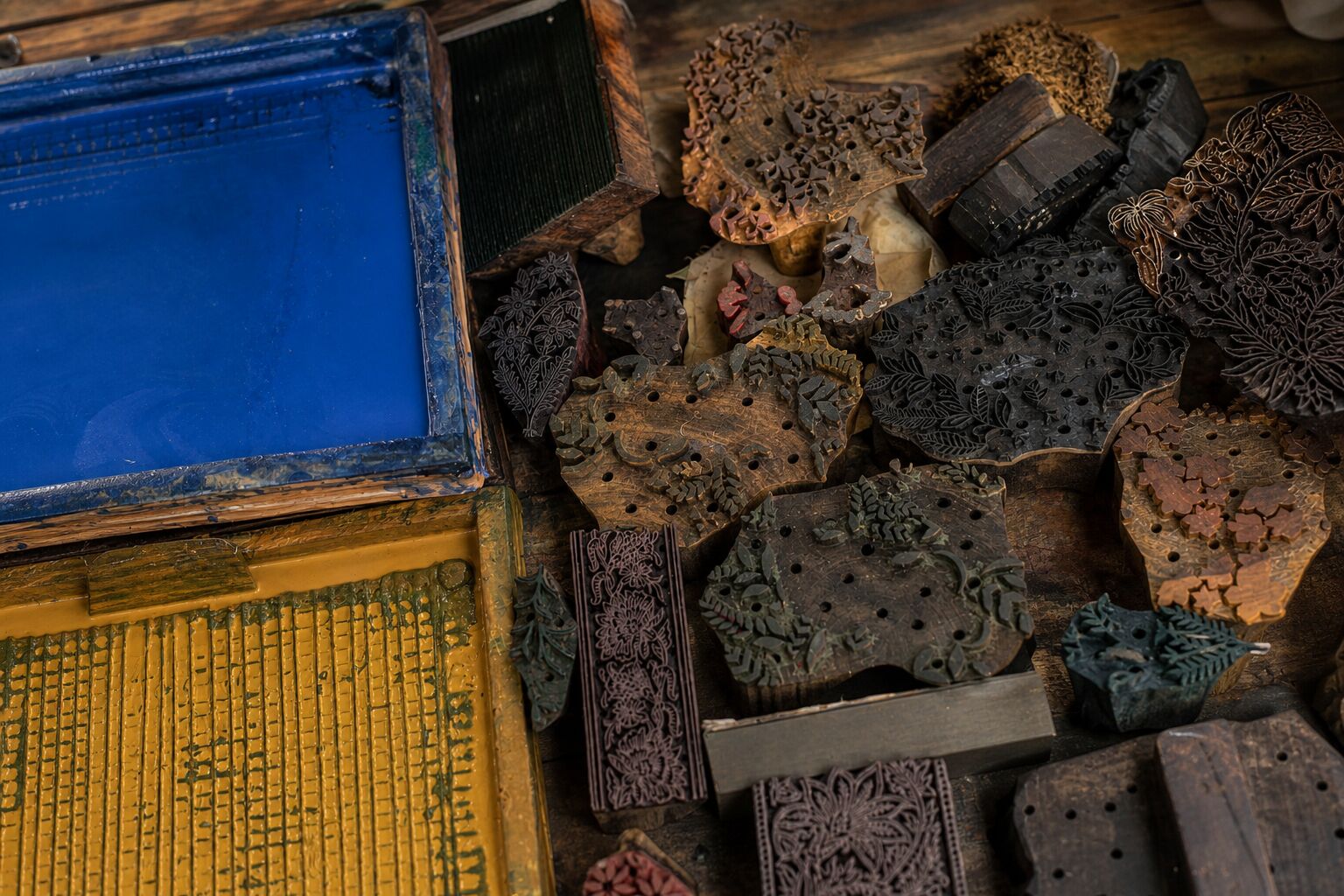
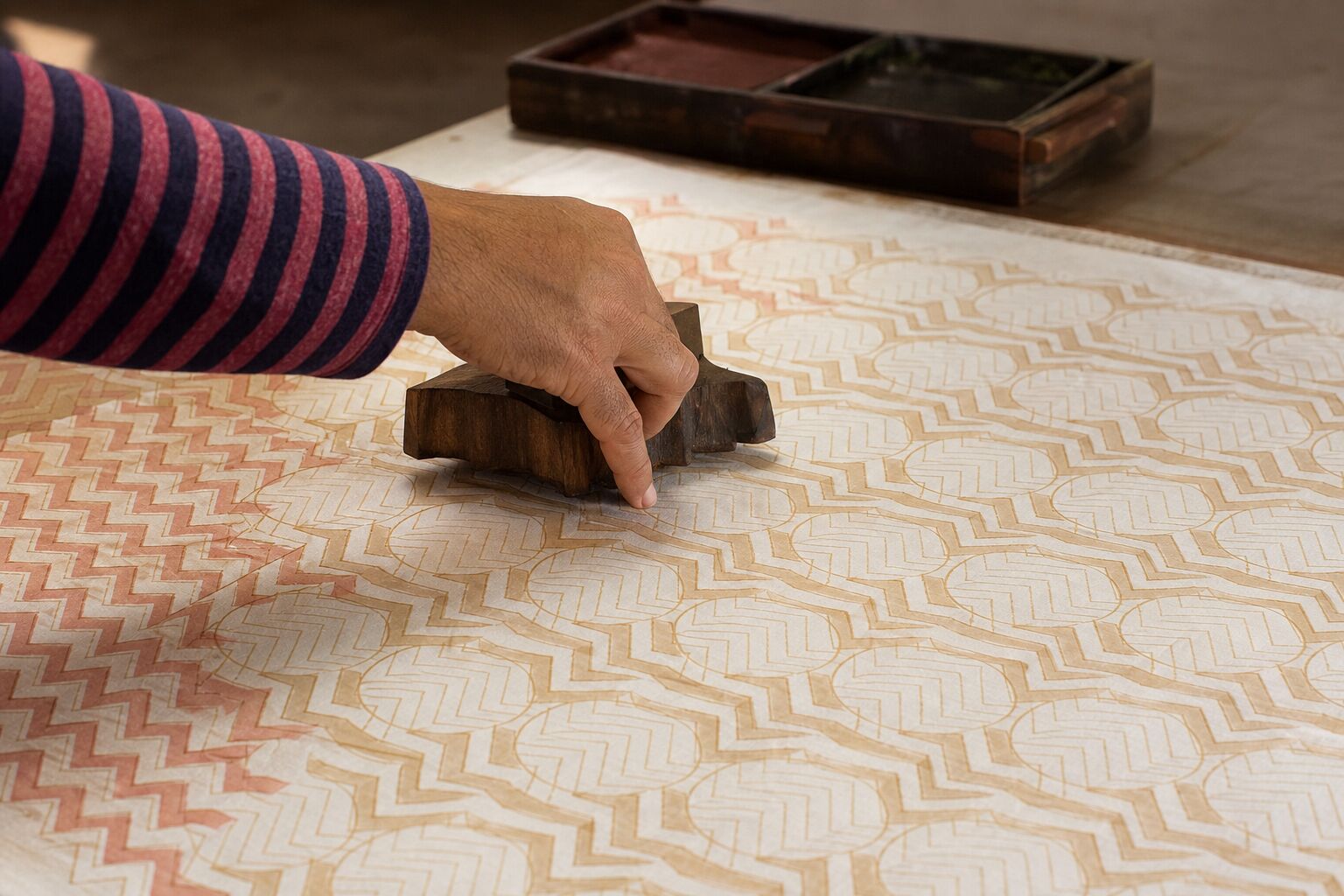
Hand block printing is a traditional surface-printing method where artisans stamp fabric using hand-carved wooden blocks, applying dye or pigment one impression at a time.
The traditional process, in brief
- Block carving: Motifs are carved into seasoned wood by specialist artisans.
- Dye preparation: Recipes often include vegetable dyes and mineral-based pigments, with variations by region and workshop.
- Printing by hand: The block is dipped in dye paste and pressed onto fabric using controlled pressure.
- Layering: Multi-color designs require separate blocks for each color and careful alignment.
- Finishing: Washing, drying, and post-treatments help stabilize color and hand-feel.
Heritage regions that shaped the craft
- Jaipur: Known for refined block-print aesthetics and an established production ecosystem.
- Bagru: Associated with earthy palettes and strong natural dye block printing traditions.
- Sanganer: Recognized for intricate florals, lighter visual language, and crisp repeat definition.
This is slow craftsmanship by design. Each meter reflects time, skill, and micro-decisions made by an artisan at the printing table. For a broader look at the technique itself, read The Art of Hand Block Printing.
Why authenticity matters in block printed textiles
Authentic hand block printing is more than a look. It is a craft system that sustains communities, preserves regional knowledge, and delivers a material character that is difficult to replicate industrially.
What authenticity protects and why buyers care
- Artisan livelihoods: Genuine production keeps value within craft clusters.
- Sustainability: Small-batch processes often align with slower, lower-energy production models.
- Uniqueness: No two runs are truly identical, which adds luxury character.
- Material performance: True dye absorption and breathable cotton or linen bases age differently than surface-coated prints.
- Brand credibility: Ethical sourcing increasingly depends on traceability and process clarity.
Machine prints can mimic motifs. They cannot replicate the process signatures that confirm handwork. If you want to see how PEXX balances artisanal character with dependable production, read Keeping Craft Intact at Production Scale.
Machine printing can copy a pattern. It cannot copy a process.
How to identify genuine hand block printed fabric
Use a combination of visual inspection, tactile cues, and practical comparisons. The markers below are especially helpful for international buyers reviewing development swatches or production samples.
Slight imperfections are a sign of authenticity
In true hand block printing, you will often see tiny overlaps where one stamp meets the next, mild unevenness in pressure, small edge smudges, and minute shifts in repeat spacing.
These are not defects in a luxury craft context. They are evidence. Perfect repetition is often a sign of machine production rather than handwork.
Check the reverse side of the fabric
Turn the fabric over. Genuine printing commonly shows dye penetration through the fibers, a softer mirrored version of the design on the back, and natural variation in how the yarns absorbed color.
Machine and digital prints often leave the reverse relatively pale, or create a sheet-like front surface where the color sits on top rather than traveling through the weave. On lighter bases such as voile, cambric, or sheeting, the reverse side should usually reveal more proof of penetration than on denser cloths, so compare like with like.
Observe the texture and feel
Authentic handmade block printed textiles on natural bases tend to feel soft, breathable, and lightly textured. The print usually feels integrated into the cloth rather than like a film sitting above it.
Machine prints can feel flatter, more uniform, or slightly slick depending on the print chemistry. When ink sits heavily on the surface, the textile often loses the woven character that handmade fabrics preserve.
Natural dyes create depth and character
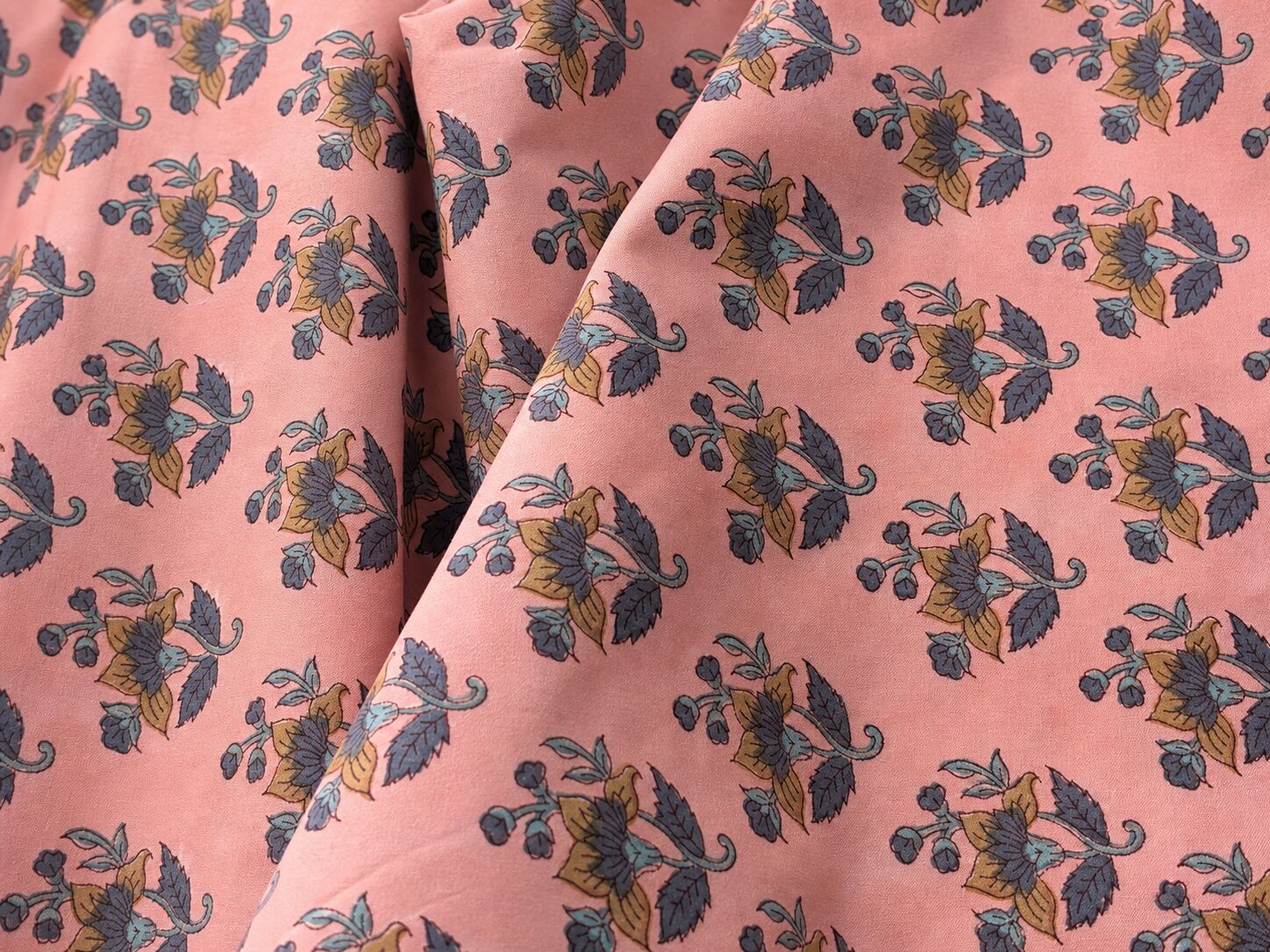
Many authentic traditions use vegetable dyes and related natural dye systems, including indigo and madder-root families, alongside mineral-based tones.
Look for earthy tonal depth rather than glossy brightness, gentle organic variation within a single color area, and color that appears absorbed into yarns instead of painted over them.
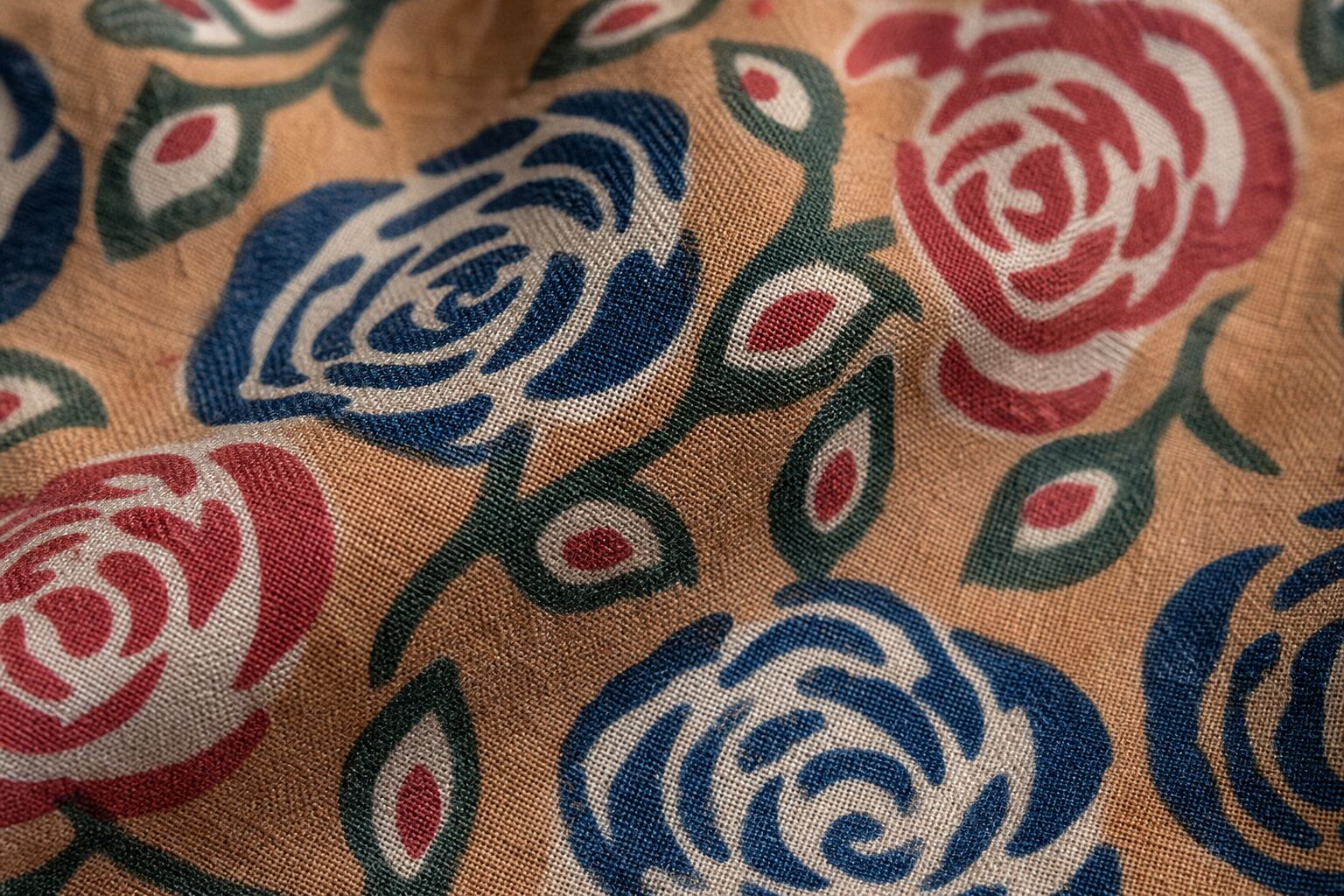
Natural dye color doesn't shout. It resonates.
Look at pattern alignment carefully
Because each impression is stamped by hand, repeats are rarely mathematically perfect. Lines may drift slightly over a long run, and large floral motifs often reveal the most visible micro-misalignment.
This is especially telling in complex layouts. A machine aligns with near-perfect precision. An artisan aligns by eye, experience, and rhythm.
Examine edges and overlaps
Focus on borders, corners, and where repeats meet. You may find faint double impressions, tiny gaps, or small overlaps at the join points. These alignment signatures are common in authentic hand block printing and are difficult to simulate convincingly at scale.
Smell can reveal natural dye usage
This is only a supporting cue, not definitive proof. Natural-dyed fabrics may carry a faint earthy or herbal note, indigo can leave a mild dye-house scent, and freshly washed natural-dyed textiles often smell cleaner and less chemical than heavily processed prints.
Authentic block prints usually cost more
Hand block printing contains real production value: skilled block carvers and printers, multiple blocks for multi-color layouts, layered printing and drying time, and a higher rejection risk because hand processes are less mechanized.
That is why genuine textiles cost more. It is not simply markup. It is labor, time, and craft density embedded in the cloth.
Craftsmanship carries production value, and the fabric remembers it.
Hand block print vs machine print
| Genuine Hand Block Print | Machine Print |
|---|---|
| Micro-imperfections in repeats and edges | Near-perfect repetition and alignment |
| Dye often penetrates; the back shows a softer mirror | The reverse can remain pale or feel sharply disconnected from the front |
| Slightly textured, integrated hand-feel | Flatter surface, sometimes coated or slick |
| Tonal depth with subtle variation within color | Uniform color fields that can look overly bright |
| Repeat alignment varies over long lengths | Consistent, mathematical repeat accuracy |
| Slower, artisan-led production | High-speed industrial production |
Regional traditions that influence authenticity
Authentic traditional block printing in India is not a single style. It is a family of regional languages, and each one leaves its own clues in the final cloth.
Jaipur block print
Jaipur is often associated with a broad spectrum of refined florals, contemporary interpretations, and established artisan ecosystems with strong finishing capabilities.
Bagru print
Bagru is known for earthy tonal families and a strong connection to natural dye textiles. Mud-resist effects, deep indigos, and grounded palettes are common reference points.
Sanganeri print
Sanganer is recognized for intricate floral motifs, finer line work, and lighter visual density. When authentic, Sanganeri-inspired prints show careful block definition and artisanal rhythm across repeats.
For buyers, regional knowledge helps validate whether a sample behaves like the tradition it claims to represent.
A true block print carries a geography. Its region is written into the repeat.
Why global buyers prefer authentic handmade textiles
Luxury fashion and interiors increasingly value what industrial supply chains cannot scale: meaning, rarity, and material honesty.
- Sustainability credibility: slower production and smaller batches can align with responsible sourcing goals.
- Luxury positioning: craft rarity reads as premium.
- Storytelling: artisanship adds narrative depth without feeling trend-driven.
- Exclusivity: subtle variation makes each run feel limited.
- Design integrity: texture and dye behavior enrich the final product.
For brands, authenticity becomes a sourcing advantage when paired with transparent manufacturing and reliable export capability.
Final thoughts
To identify genuine block printed fabric, look for process evidence: micro-variations, dye penetration, tactile integration, and the quiet irregularity that only handwork creates. Authenticity awareness protects design quality and helps preserve the artisan traditions that define India's craft heritage.
If you are building a collection and need consistency, traceability, and premium finishing, explore PEXX's hand block printed textile approach, visit our artisan process workshops, or connect with our team for custom developments and export-ready production.
Once you have established how a fabric is made, look at how well it is made. In Beyond the Print: what defines quality in hand block printed fabric, we explain how fabric selection, colour, block detail and finishing shape the completed piece.
Frequently asked questions
How can you tell if fabric is hand block printed?
Look for small variations in alignment, slight overlaps at repeat edges, and gentle tonal shifts in color. Check the reverse side too. Genuine hand block printed fabric often shows dye penetration with a softer mirror of the design, and the print feels integrated into the cloth rather than sitting on top of it.
Do genuine block prints have imperfections?
Yes. Minor irregularities such as tiny smudges, uneven pressure, or small motif shifts are common in authentic hand block printing because each impression is stamped by hand. In craft textiles, these are process signatures rather than flaws.
Why does block printed fabric show color on the back?
In many authentic prints, dye absorbs into the yarns and travels through the weave, creating visible penetration on the reverse side. The back usually appears lighter and more ghosted than the front, unlike many machine or digital prints.
Are natural dyes used in authentic block printing?
Often, yes, especially in traditions associated with indigo and vegetable-dye families. Natural dyes typically produce earthy depth and subtle tonal variation, although authenticity is defined by the hand process rather than dye type alone.
Is hand block printing sustainable?
It can be more sustainable than high-volume industrial printing because it is slower, often batch-based, and usually paired with natural fibers like cotton and linen. That said, sustainability still depends on dye chemistry, water handling, and finishing standards.
Why are handmade block prints expensive?
They require skilled labor across block carving, dye preparation, hand stamping, layered color registration, drying, and finishing. The cost reflects time, artisan expertise, and the complexity of achieving consistency through a manual process.
What is the difference between digital print and block print?
Digital prints are machine-produced with precise repetition and speed, often creating a flatter surface feel and less dye penetration. Hand block prints are stamped manually with carved blocks, so they show more tactile depth and subtle repeat variation.
Which Indian regions are famous for block printing?
Rajasthan is especially well known, particularly Jaipur, Bagru, and Sanganer. These clusters are globally recognized for their artisan communities, motif languages, and long-standing craft infrastructure.