
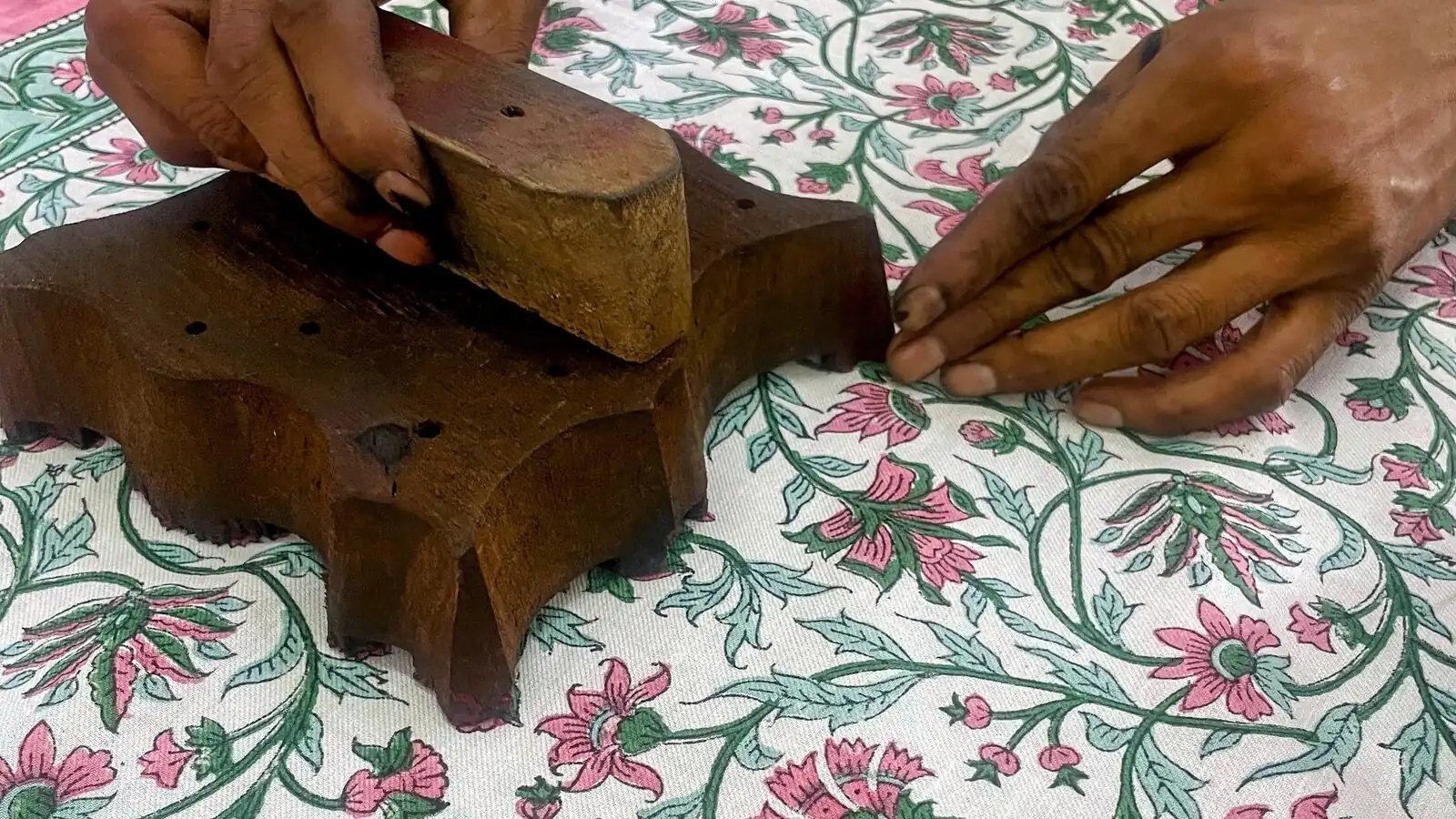
The quality of hand block printed fabric begins with the right cloth for the design, carefully prepared for printing. Finely carved blocks, considered colours, suitable dyes and skilled printing preserve the motif's detail. At PEXX, we bring that care to every stage, from sourcing the specified fabric through established vendor relationships to the finished piece's look and feel.
Quality is built into a piece long before it is finished.
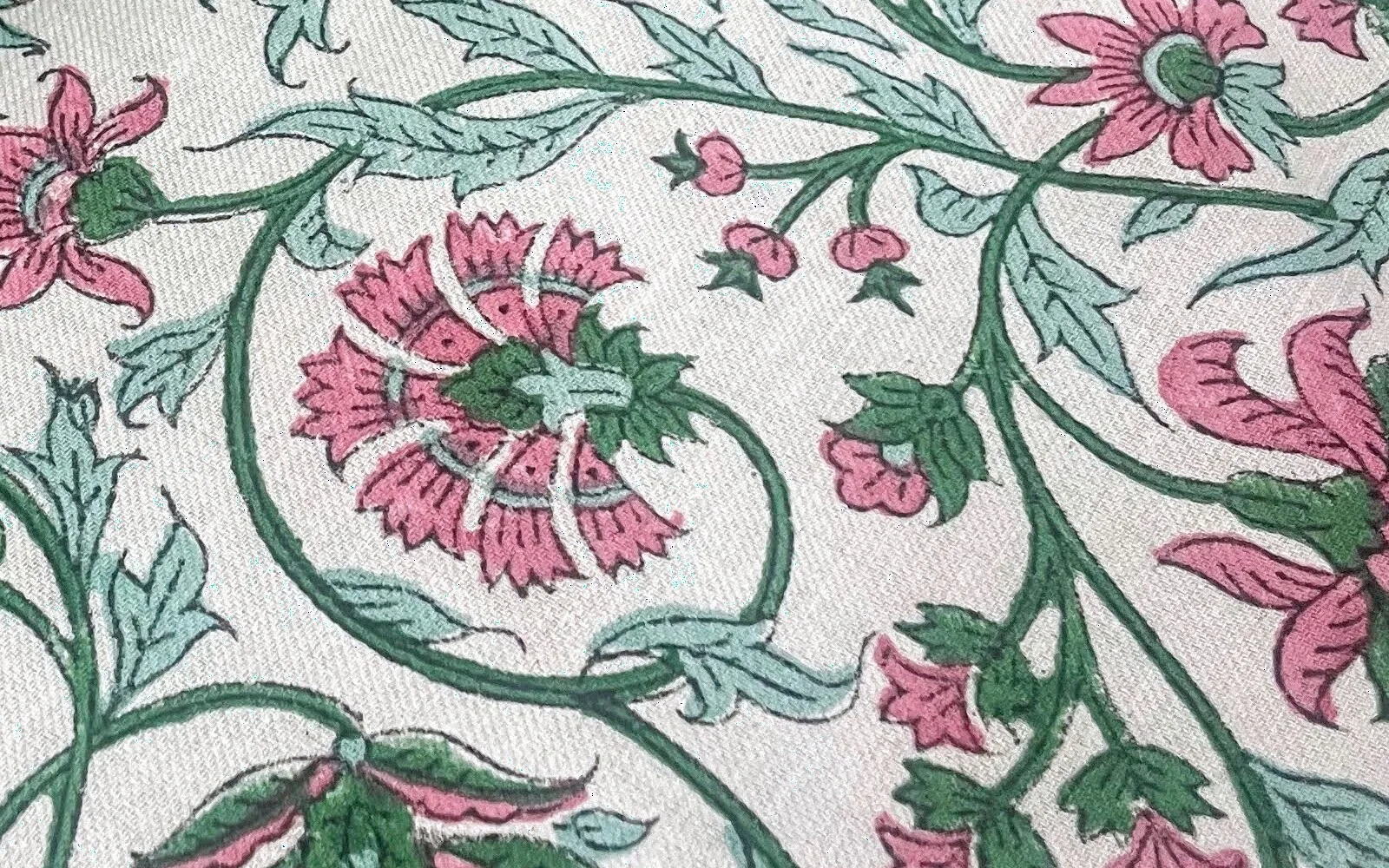
Unfold a length of printed fabric and the design is only the beginning. The cloth has a weight, a fall and a texture. Within a flower, a narrow line can give the motif its character.
Those are the details we work towards at PEXX. The finished piece carries the decisions made long before that first unfolding.
Fabric sourced through lasting relationships
We source our fabric through relationships with vendors developed over years. That understanding helps us obtain the quality and count we want for a design.
The choice begins with what the print needs. We consider the fabric's construction, weight and feel alongside the scale and character of the design. The fabric is sourced to that requirement, with the quality and count specified before printing begins.
A fine motif and a generous, flowing print ask different things of the finished piece. In both, the fabric has to support the design and feel right for its use.
Fabric count is part of that choice, rather than a quality claim on its own. Yarn size, thread density and weave work together. An airy fabric and a more structured one serve different purposes. What matters is obtaining the construction the design requires, consistently.
Preparation matters too. Clean, absorbent cloth with an even, undistorted surface provides the foundation for good printing. Residues and uneven preparation can affect how the colour takes.
The design deserves a well-chosen, well-prepared surface. That foundation stays with the piece long after the first viewing.
How colour and dyes shape print quality
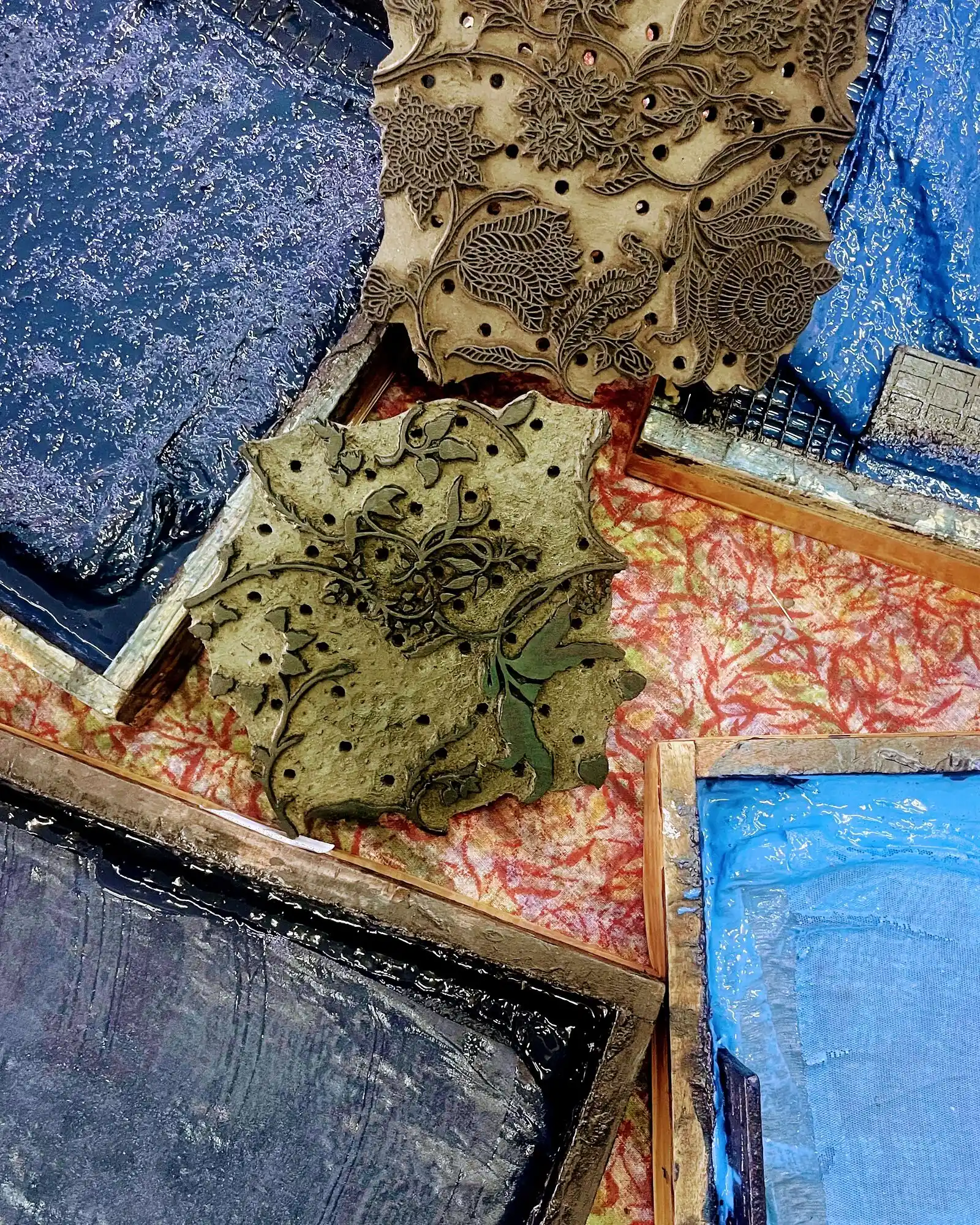
We consider the colours together, on the fabric they will become part of.
The outline, the filling and the ground need a relationship. A small motif should remain distinct. In a larger print, the colours should give the design balance across the full length.
Dye selection receives the same attention. At PEXX, we use carefully selected, high-quality, azo-free dyes, with care given to the preparation and application of the colour.
In textile printing, the consistency of the printing colour affects its flow and the separation of neighbouring shades. This is part of how a fine line remains legible rather than spreading into the detail around it.
For us, the aim is a colour combination that feels resolved on the chosen fabric, with the design's finer details still visible.
Fine detail begins in the block
The design has to survive its journey from drawing to carved wood to cloth.
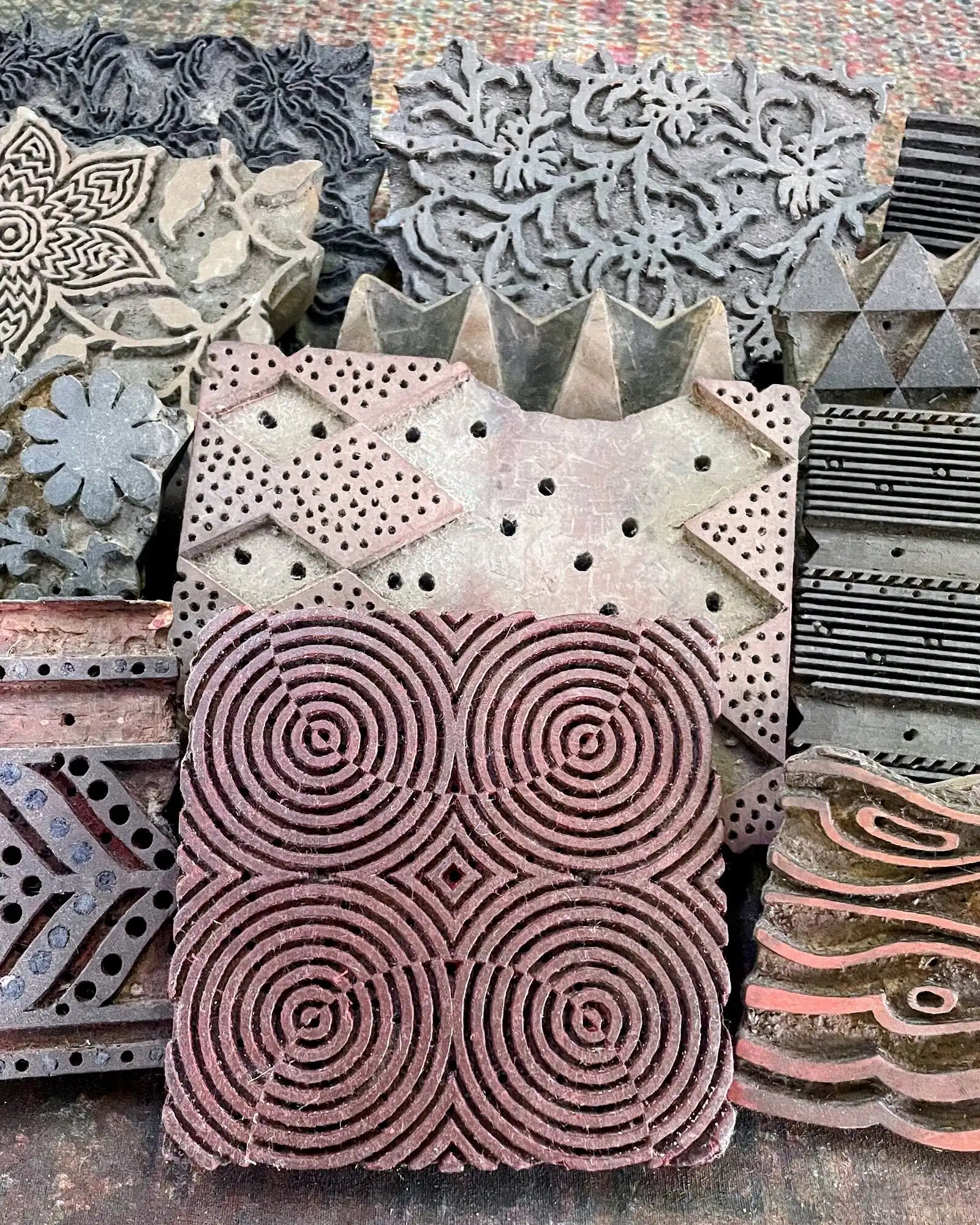
A block's printing face needs to be even, and its motif carefully defined. In the craft of block making, precise carving preserves the edges and spaces that give the design its detail. Those spaces matter as much as the raised lines that carry the colour.
At PEXX, we give that work close attention. The smallest motif deserves a clear impression. A large print needs its finer details to remain visible within the whole design.
A leaf, a narrow line within a flower, a small opening between shapes: losing any of them can change the character of the print. The care in making the block is already visible in the impression it leaves.
The hand that brings the print together
A well-made block still needs a skilled printer.
The colour must be taken up evenly. The cloth needs to sit flat and remain in position. The printer has to judge pressure and place each impression so the repeat develops across the length.
Where a design uses separate outline and filling blocks, their alignment gives the motif its definition. These are central parts of the Sanganer printing process, and they explain why the quality of the work depends on more than the drawing alone.
We pay attention to that definition and continuity as we print. The approved sample gives the work a reference across the order.
A slight movement in an impression can belong to the character of hand printing. Clear motifs, considered placement and a coherent repeat are what allow that character to feel beautifully made.
What finishing reveals about fabric quality
Finishing completes the experience of the fabric.
Drying, setting the colour and washing where the colour system requires it each have a role; the sequence depends on the printing method. The fabric's feel and appearance after finishing matter alongside the fresh impression on the table.
Colour performance has different dimensions too. Resistance to washing and resistance to rubbing are separate qualities. A photograph of a new print cannot establish either.
For a buyer, the useful question is how the finished sample performs under the care it is intended to receive. Ask which washing and rubbing checks apply to the fabric, and compare the result with the agreed sample. A vivid colour in a photograph is an introduction to the palette, rather than evidence of colourfastness.
At PEXX, the finish receives the same attention as the fabric, colour and block. We consider how the completed length looks, how it falls and how it feels in the hand.
That is what gives a finished piece its premium character: the right fabric, colours that sit well together, detail that remains clear, and care carried through the making.
What a photograph cannot tell you
Two printed fabrics can look remarkably similar on a screen. Unfolded on a table, they can offer quite different experiences.
An image can introduce a design while leaving its substance, drape and finish difficult to judge. This is where expectations can fall short: the fabric in hand may feel very different from the one imagined.
For a wholesale or export buyer, that difference eventually becomes part of the collection carrying your own name. A finished physical sample lets you assess the fabric's substance, drape and feel alongside the print. Ask to see enough of the design to judge the repeat, as well as a close view of its smallest details.
Authenticity and quality are related questions, but they are different assessments. Our guide to identifying genuine hand block printed fabric looks at how it is made. Here, the concern is how well the fabric, colour, carving and finishing work together. We also explain how we carry that care through a production order.
We make our fabrics with that moment of unfolding in mind. Our Interiors collection offers an introduction. A physical sample lets you get to know the work more closely.
Discuss your fabric requirements with PEXX. Tell us about the piece you have in mind, its intended use and the print you are drawn to. We can discuss the fabric and sampling for your collection.