
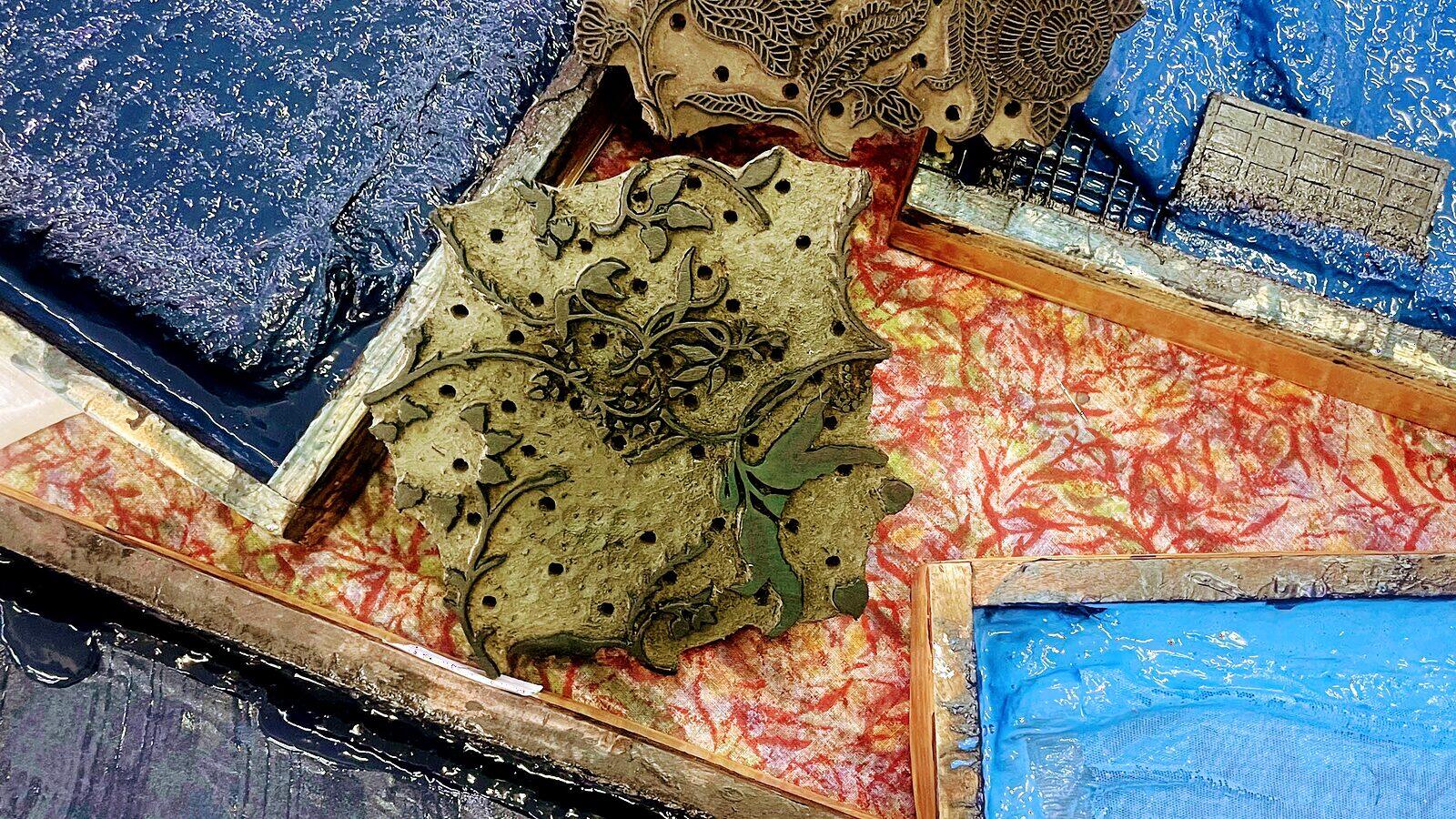
Most hand block printed orders take 45 to 60 days from confirmation to dispatch. The range moves with the quantity, the fabric and the weather. Cutting new blocks takes 10 to 14 days and sits inside that window, not on top of it. PEXX publishes no minimum order quantity — a first order is meant to be small enough that you can sell it through.
How long does a hand block print order take?
Forty-five to sixty days, from a confirmed order to goods leaving. If your design needs blocks that don't exist yet, the carving takes ten to fourteen days and it happens inside that window, at the front — not stacked on the end.
Fifteen days is a wide gap and you're right to poke at it. Three things move it, and you can usually tell in advance which one is going to move yours.
| What moves it | Which way | Why |
|---|---|---|
| Quantity | more pieces, longer | Printing happens on a table, one length at a time. Table time is the one thing we can't run in parallel forever. |
| Fabric | voile fastest, quilted slowest | Voile drinks colour and dries quickly. Heavier cotton takes longer at both ends. Anything quilted goes off to be stitched after printing, so a quilt sits about a week behind a bedcover in the same print. |
| Weather | monsoon adds days | Printed cloth is washed and laid out to dry in the open. In a wet week the yard doesn't dry, and there's no version of us that can hurry that. |
If your date is genuinely fixed — a launch, a fair, a festival — say so in the first email, not the fifth. We can nearly always build a plan around a date we know about. There is very little we can do for one that turns up in week five.
And if you need goods sooner than that, ask what's already made. Running stock in current prints ships far faster than something made to your design. Forty-five to sixty days is the number for a print that doesn't exist yet.
What is the minimum order quantity?
We don't publish one, and that's deliberate.
A first order isn't a sales figure to us, it's a trial run in both directions. Did we understand what you actually meant, or only what you wrote? Is the quality what we said it would be? Does somebody reply when you message on a Tuesday afternoon?
You learn all of that on a small order just as well as on a large one, and only one of those is comfortable to be wrong about.
We also know what a first order actually is. It's your own money, months ahead of any of it selling, with a supplier you've never met, for stock you have already imagined on the shelf. Start with what you can sell. That isn't us managing your expectations — it's the order we'd place ourselves.
So tell us what you're making and roughly what you need. If it's too small to make sensibly, we'll say so honestly and tell you why. That happens sometimes, and it's a better conversation than a quote that quietly doesn't add up.
What will I have to pay, and when?
Nobody enjoys asking this, so we'll go first: ask us in the very first email. We'll tell you the advance, when the balance is due and whether sampling is charged separately, before you commit to anything at all.
It's your money leaving months before anything comes back in. You're entitled to know exactly when each part of it goes, in writing, without having to chase it.
What if the sample doesn't look like what I pictured?
Almost nobody puts this in the email. Everybody thinks it. Say it out loud, because this is the one stage where changing your mind costs nothing.
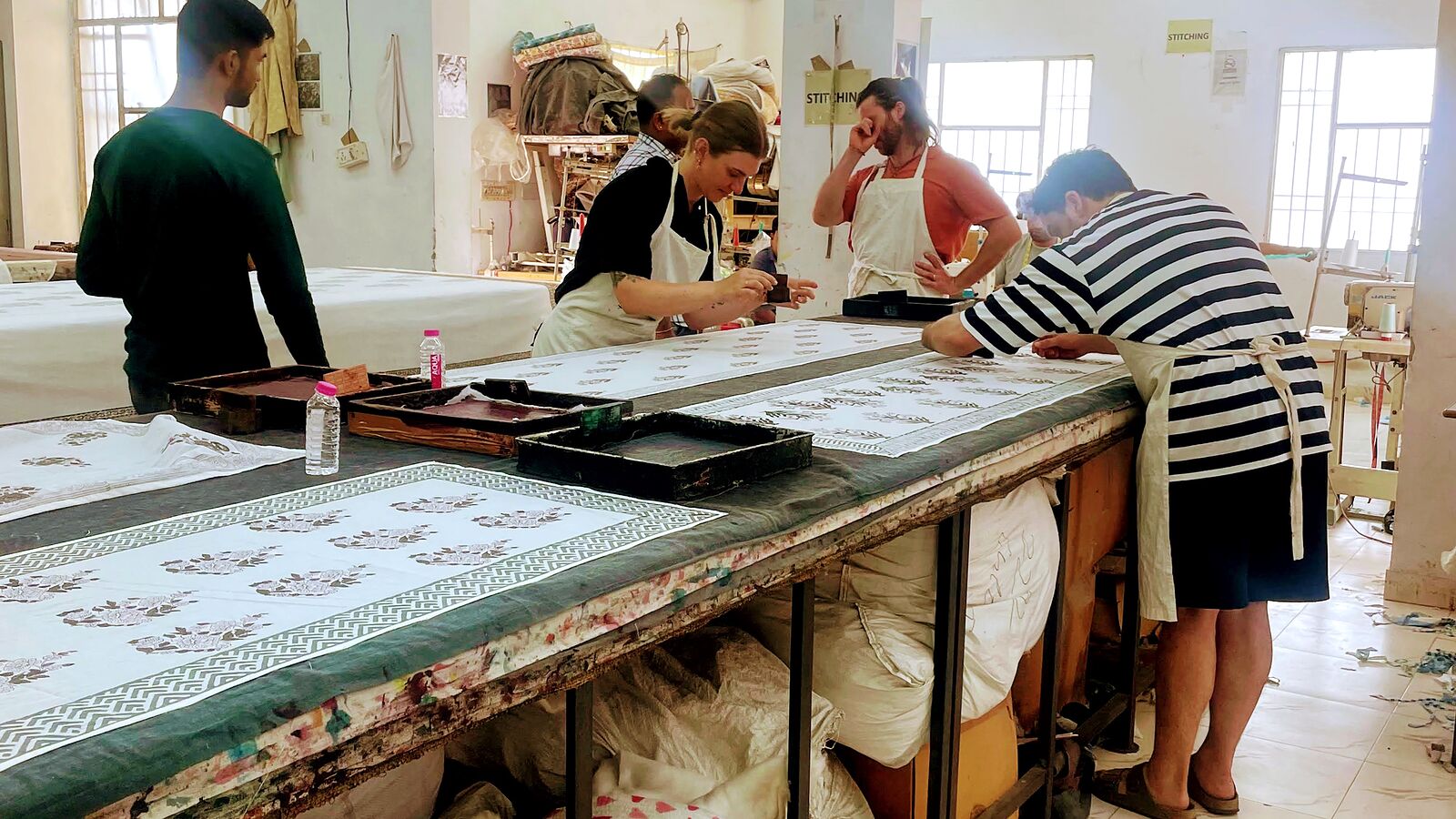
You'll see the print on your actual cloth, in your actual colours, before bulk begins. When it arrives, don't approve it from your phone. Take it to a window. Put it on a bed, or on the shelf beside the things you already sell. Photograph it in the light your customer will see it in, because a colour that looks right in a showroom can look wrong in a photo, and you'll be selling from photos.
Then say what's off, plainly. "Too yellow" tells us everything. So does "lovely, but go a shade deeper". What doesn't help is "not quite there" — we'll guess, and we'll guess wrong.
One thing worth settling before bulk: how much colour variation you're happy with. Dye is mixed by hand and shifts a little between batches. That variation is why the cloth looks alive instead of machine-printed. It is also, if nobody agreed a range up front, the thing you end up arguing about while a customer waits.
And if the print sells and you want it again — ask us to keep a swatch of the approved batch. It costs nothing and it settles the question next season.
What makes a block print order run late?
Almost never the printing.
It's a sample sitting unopened on somebody's desk for a fortnight. The clock doesn't restart until it's approved, so two quiet weeks there become two weeks off the far end — usually the two you needed.
So: before you send the enquiry, decide who signs off samples and give that person a date. It'll save you more time than any amount of chasing later.
How to get a block print order delivered faster
- Use prints and blocks that already exist. That takes the carving out of your timeline entirely.
- Tell us the delivery date you actually need, and what it's tied to.
- Send a photo of a colour you love, not just a code. We'll match to cloth.
- Say what the piece is for. A quilt for a nursery and a quilt for a hotel are built differently.
- Answer the sample the week it lands, even if the answer is "give me a week".
Tell us what you're making
If you've read this far you've got something specific in mind. A first range, maybe. Or the category you've been meaning to add for two seasons and keep putting off because sourcing it looked like a whole project.
Tell us what it is, roughly how many, and when you need it in hand. We'll come back with what we can do by that date, and we'll say straight out if we can't. If it's easier to talk, say so and we'll call.