
Five moments in the journey of a hand block printed textile.
Before a cloth exists, a block does.
The Origin
Carved from a single piece of seasoned teak, shaped by a craftsman who may have spent weeks on a single motif, the block is the beginning of everything. In Rajasthan, some of the blocks used in studios today are older than the studios themselves. The carver's work is invisible once printing begins, but without it, nothing follows.
The Colour
Before the block touches the cloth, the colour must be prepared.
Natural dye is not chosen from a chart. It is drawn from mineral, bark, root, and earth. The ochre in this print comes from iron-rich mineral deposits local to Rajasthan. The plum from fermented indigo and bark. Each dye batch behaves slightly differently depending on temperature, humidity, and the mineral content of the water used that day.
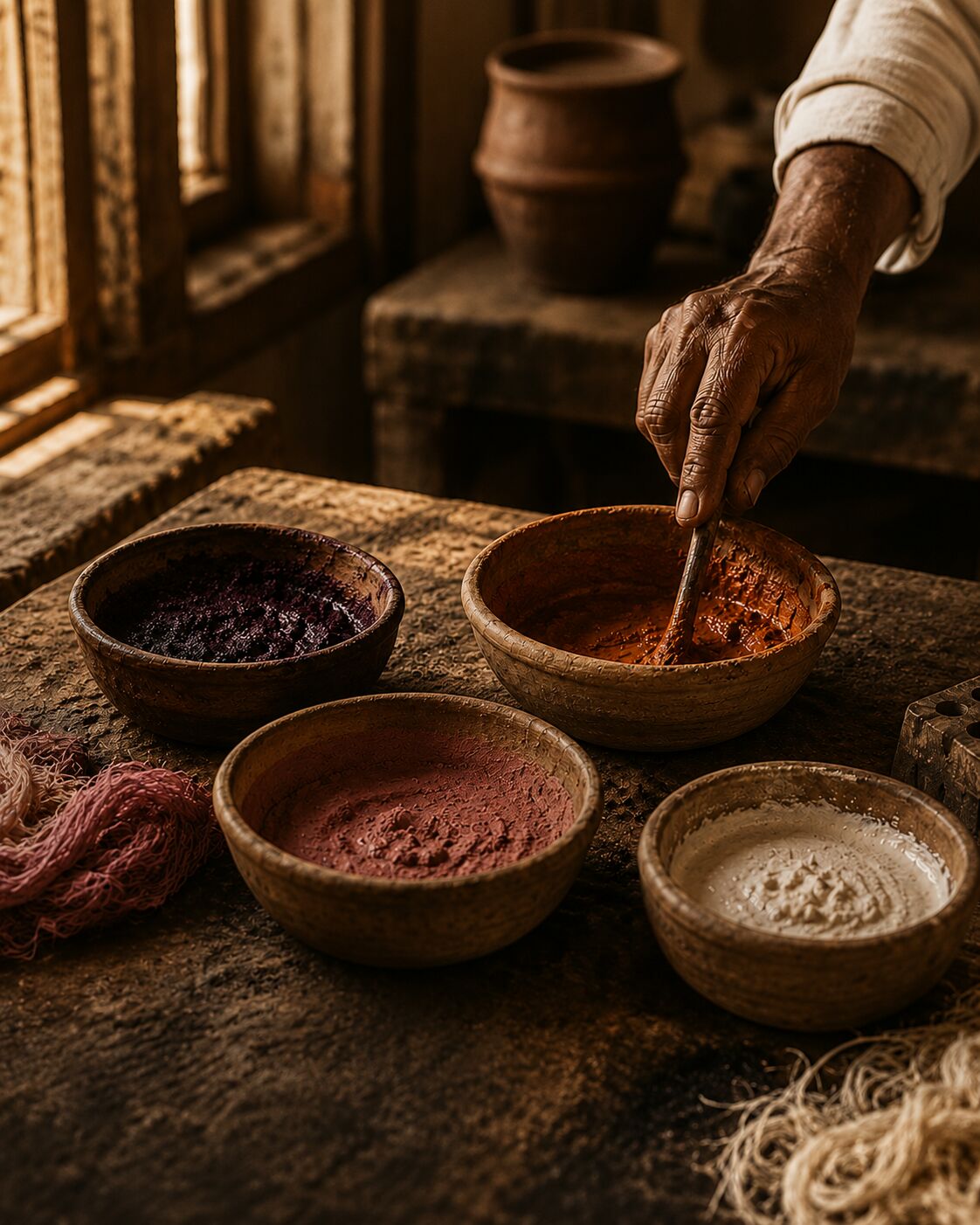
This is why no two production runs are ever exactly the same colour. That is not a flaw. It is provenance.
The Making
A single metre of hand block printed fabric requires between 1,500 and 2,500 individual block presses.
Each press is positioned by hand. Aligned by eye. Applied with the consistent weight of a craftsman who has learned, over years, exactly how much pressure the cloth requires. Too light, and the dye sits on the surface. Too heavy, and it bleeds past the motif edge.
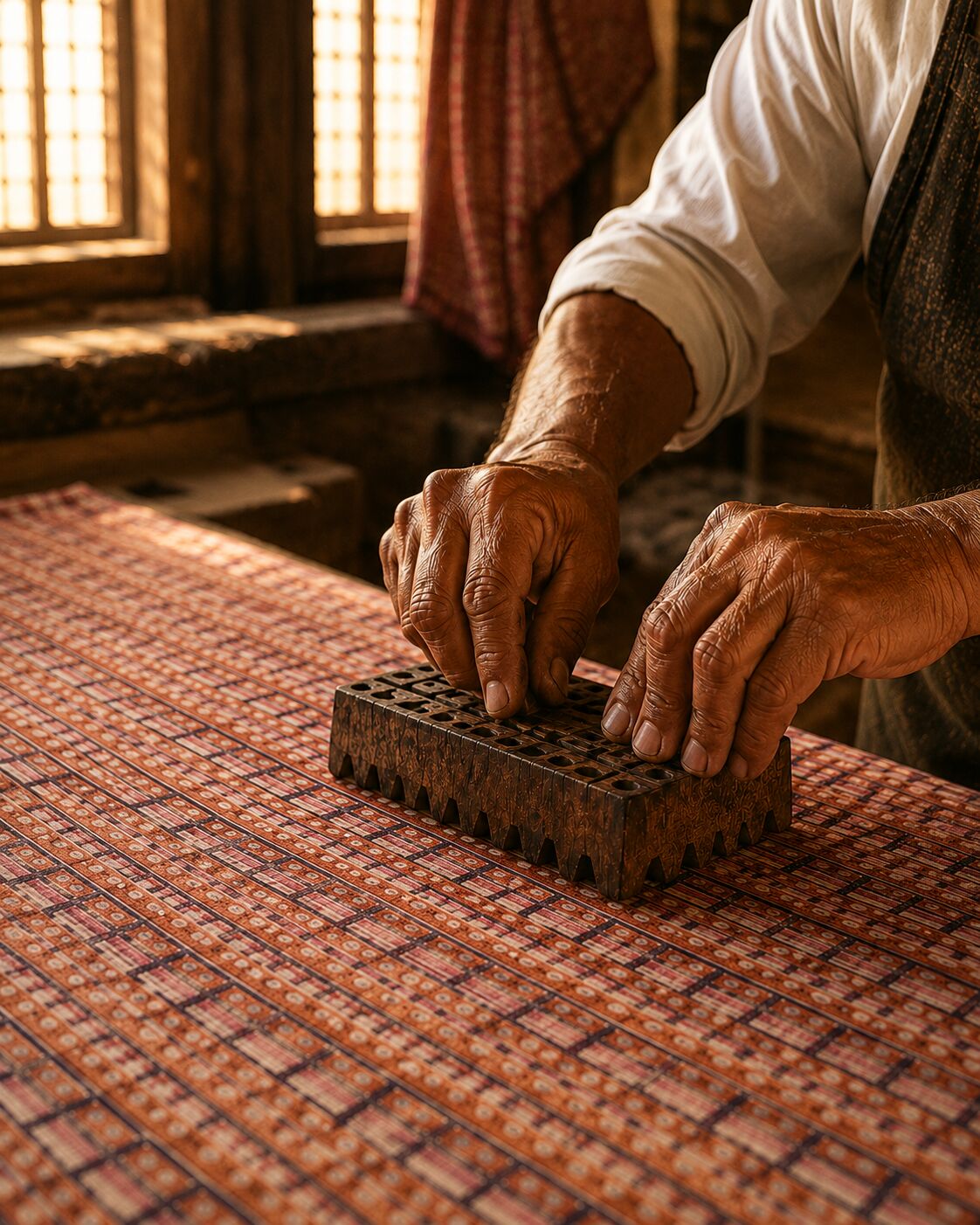
This is the knowledge that cannot be encoded into a machine.
The Pattern
What you see in the finished cloth is the accumulation of four separate passes: four different blocks, four different colours, four drying cycles between each.
The grid you are looking at took a full working day to print. One metre. One craftsman. Six hours.
The Question
Not every print that looks handmade is handmade.
Roller printing and screen printing can approximate the visual effect of block print. But they cannot replicate the micro-variations in pressure, the slight colour shifts between passes, the ghost of ink at the motif edge where the block lifted.
We have written a full guide to identifying the real thing. Read: How to Identify Genuine Hand Block Printed Fabric.
The Home
When a piece of PEXX cloth arrives with you, it carries the memory of everyone who touched it.
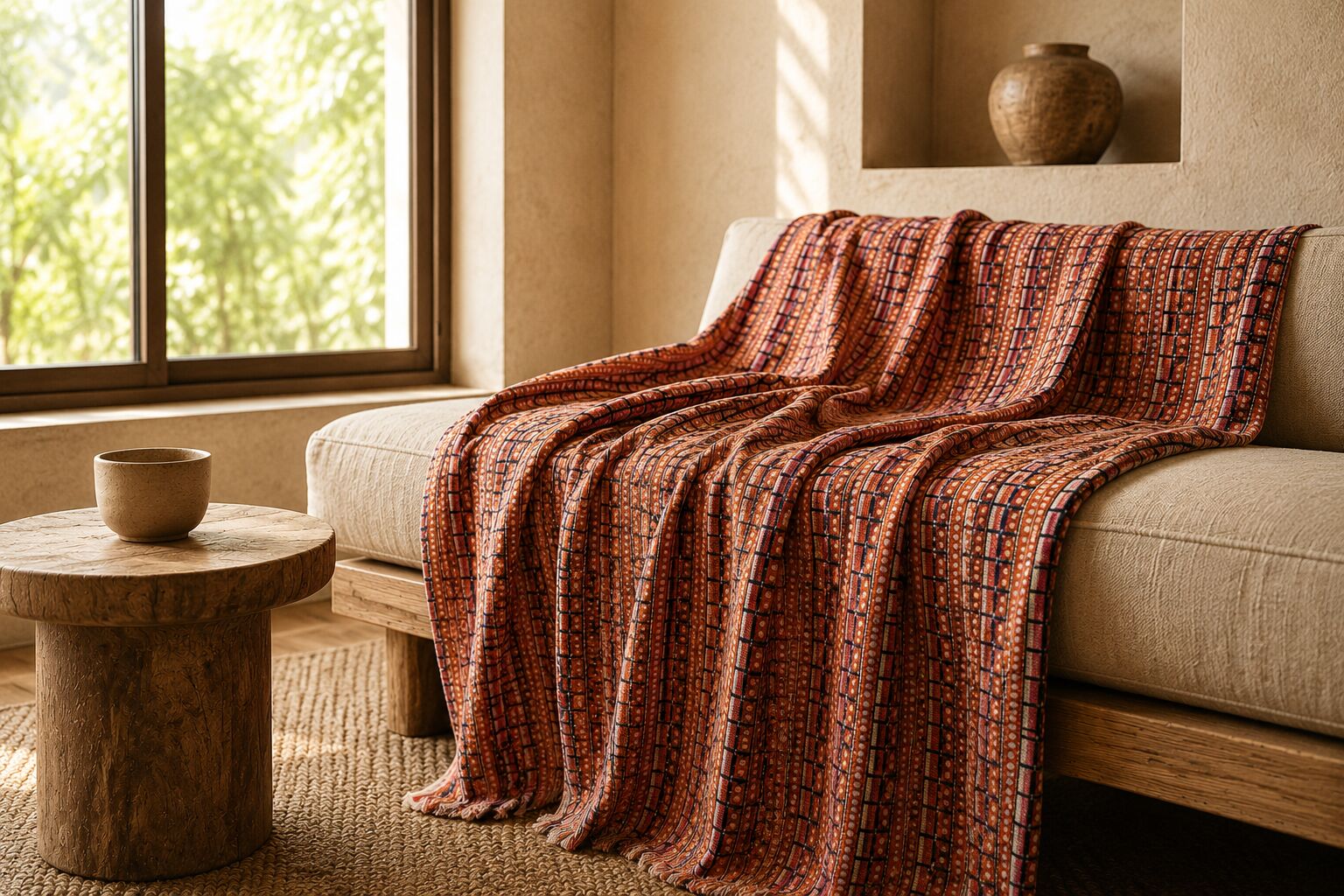
The carver. The dye mixer. The printer. The inspector who passed their hand across the surface before it was folded.
Slightly irregular. Deeply intentional. Made by hands that spent a lifetime learning the weight of a block.
That is what we mean by slow. That is what we mean by handmade.
PEXX. Slow. Soulful. Handmade.